Mistral Large 4 vs Claude Opus 5 vs GPT-6.1 Sol vs Gemini 4 Argon: Which Frontier Model Should You Actually Pay For

The short version
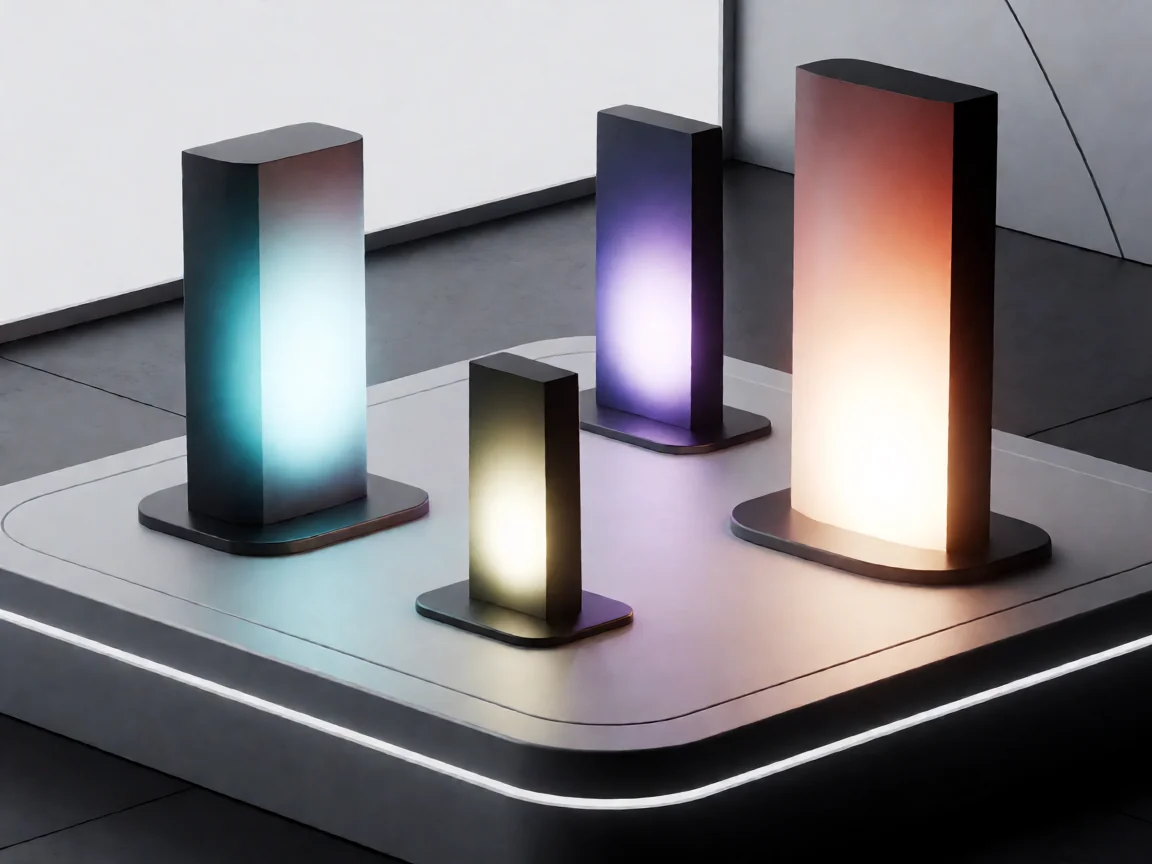
Four frontier models, four different jobs, and the right one depends on whether you need raw intelligence, value, a European data-residency story, or an Anthropic-shaped alternative. Mistral’s new Large 4 “Le Chonk” just crashed the party with a 1.05-trillion-parameter European MoE. OpenAI’s GPT-6.1 Sol is the value play. Anthropic’s Claude Opus 5 still tops blind human eval. And Google’s Gemini 4 Argon is the limited-release comeback. Here is how to actually choose. [E1 our take]
The four contenders at a glance
| Model | Positioning | Active / Total params | Pricing (in/out, $/1M) | Standout |
|---|---|---|---|---|
| Mistral Large 4 “Le Chonk” | European sovereign frontier | 49B / 1.05T | $1.36 / $4.18 (API preview) | Cybench 93%, 1M context, native vision |
| Claude Opus 5 (Anthropic) | Top blind human eval | Not disclosed | Premium (API) | Surge AI human eval 4.22/5 — best of 5 |
| GPT-6.1 Sol (OpenAI) | Value / speed | Not disclosed | ~1/5 of Astra | Ultrafast tier 300 tok/s |
| Gemini 4 Argon (Google) | Limited-release comeback | Not disclosed | Not disclosed | Top-3 lab return, limited release |
Figures from Mistral’s announcement and MarkTechPost (E3/E4) and VentureBeat’s Sol/Argon coverage (E4) E3 Mistral; E4 MarkTechPost / VentureBeat.
Mistral Large 4: the European wildcard
Le Chonk is the model that should reset expectations for what “open-leaning” means in 2026 E4 MarkTechPost, Oct 6 2026. A 1.05T granular MoE with 49B active per token, native image input, and a 1M context, it reports 93% on Cybench and 82% on CyberGym-E2E — and Mistral claims some closed frontier models score near zero on the latter because they refuse the task. In blind human eval it landed 3.74/5, second of five and behind Claude Opus 5 (4.22) E3 Mistral; E4 MarkTechPost. The catch: weights ship end of October, and the coding numbers were privately evaluated.
Claude Opus 5: still the human favorite
Anthropic’s Opus 5 keeps winning the only benchmark that correlates with “will a person actually like using this” — blind human preference. In the same Surge AI run that put Mistral at 3.74, Claude Opus 5 scored 4.22 E4 MarkTechPost. If your product lives or dies on output quality that a human reviewer judges, that gap is the whole story. Anthropic also earmarked $100 million to train over 10,000 AI engineers this week, a clear signal it is building for the enterprise lane E4 TechRadar, Oct 6 2026.
GPT-6.1 Sol and Gemini 4 Argon: the value and the wildcard
OpenAI’s Sol is the version most teams will actually run — Astra-like performance at about a fifth of the price, with an Ultrafast tier at 300 tokens per second aimed at interactive coding and human-in-the-loop work E4 VentureBeat, Sep/Oct 2026. Google’s Argon retook a benchmark lead over OpenAI and Anthropic but in limited release, positioned around software development, knowledge work, and cybersecurity operations E4 VentureBeat. Neither is a bad model; they are just not the headline act this round.
How to actually choose
- Need the highest human-rated quality → Claude Opus 5, and budget for it.
- Need smart at volume → GPT-6.1 Sol — the default for production APIs.
- Need EU data residency + native vision + 1M context → Mistral Large 4, once weights land.
- Locked into Google / need Argon’s benchmarks → Gemini 4 Argon where available.
The discipline that saves money: route by task. Don’t pay Opus or Astra prices for work Sol or a well-prompted Mistral handles. Most pipelines should call the cheap model by default and escalate only for the tasks that actually need it. [E1]
Verdict
Claude Opus 5 wins on judged quality, Mistral Large 4 wins on the sovereignty-and-vision story, GPT-6.1 Sol wins on value, Gemini 4 Argon fills the Google gap. Route by job, and stop overpaying for routine calls. [E1]